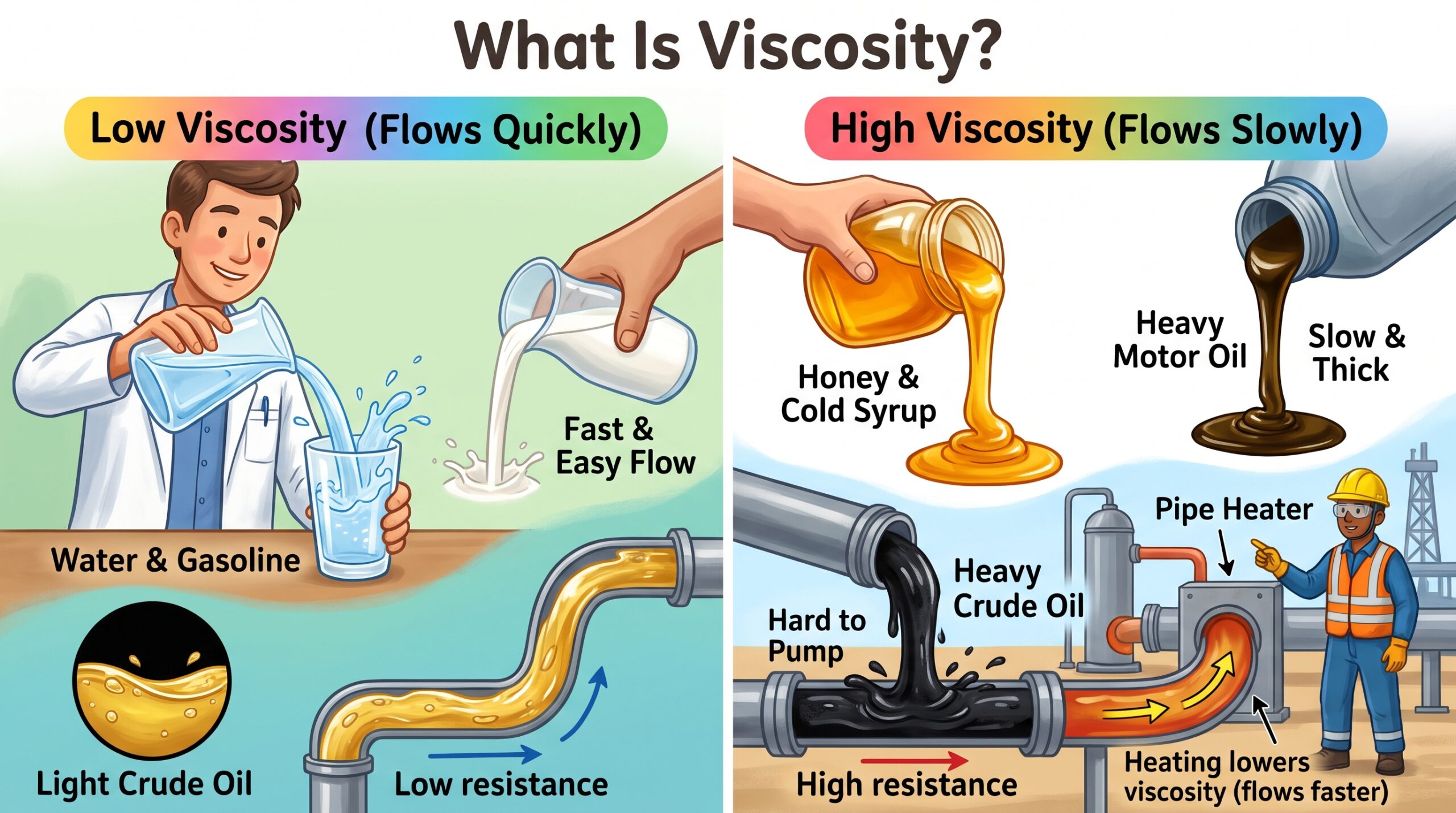
Viscosity is a scientific word used to describe how easily a liquid flows. If a liquid flows quickly and easily, scientists say it has low viscosity. Water, milk, and gasoline are common examples of low-viscosity liquids. If a liquid is thick and moves very slowly, it has high viscosity. Honey, cold maple syrup, and heavy motor oil are examples of high-viscosity liquids.
In the oil industry, understanding viscosity is critical for engineers and pipeline operators. Crude oil comes in many different grades from different parts of the world. Some oil is light, golden, and watery, meaning it has low viscosity. Other types of crude oil are black, sticky, and thick like wet road tar. This heavy oil has very high viscosity and barely moves on its own.
Pumping high-viscosity oil through long metal pipes requires a lot of extra energy. If the oil is too thick, it can clog pipes or damage pumps. To solve this problem, engineers often heat the heavy oil. When liquids get warm, their viscosity drops, and they flow much faster. Engineers can also dilute thick oil with lighter liquid fuels so it moves smoothly through the transport network.